Deep dive · Region
Chiloé — Stilt Houses, Churches & Rainforest — Full Guide (Chile)
Palafitos, UNESCO wooden churches, penguins and curanto on Chile's green island
Last updated 2026-08-10
- Island size
- 9,181 km²
- Anchor town
- Castro
- UNESCO sites
- 16 wooden churches
- Best season
- Nov – Mar
- Gateway
- Puerto Montt + ferry
- Minimum stay
- 2 – 3 days
Table of contents
Overview
Chiloé is Chile's second-biggest island, and it feels like a world of its own: a green, rainy archipelago where the culture is more Pacific-island than Andean. Its icons are the palafitos — wooden houses on stilts painted in bright colors — the 16 UNESCO-listed wooden churches, a rich mythology (ghost ships, witches and the mermaid Pincoya), and the best seafood in Chile, crowned by curanto, a feast cooked in an underground pit.
The island is a 30-minute ferry ride from the mainland at Pargua, and the natural extension of any Lake District itinerary. Two to three days is enough for the essentials: Castro's waterfront, the churches of the eastern coast, and the penguins at Puñihuil.
Castro and the palafitos
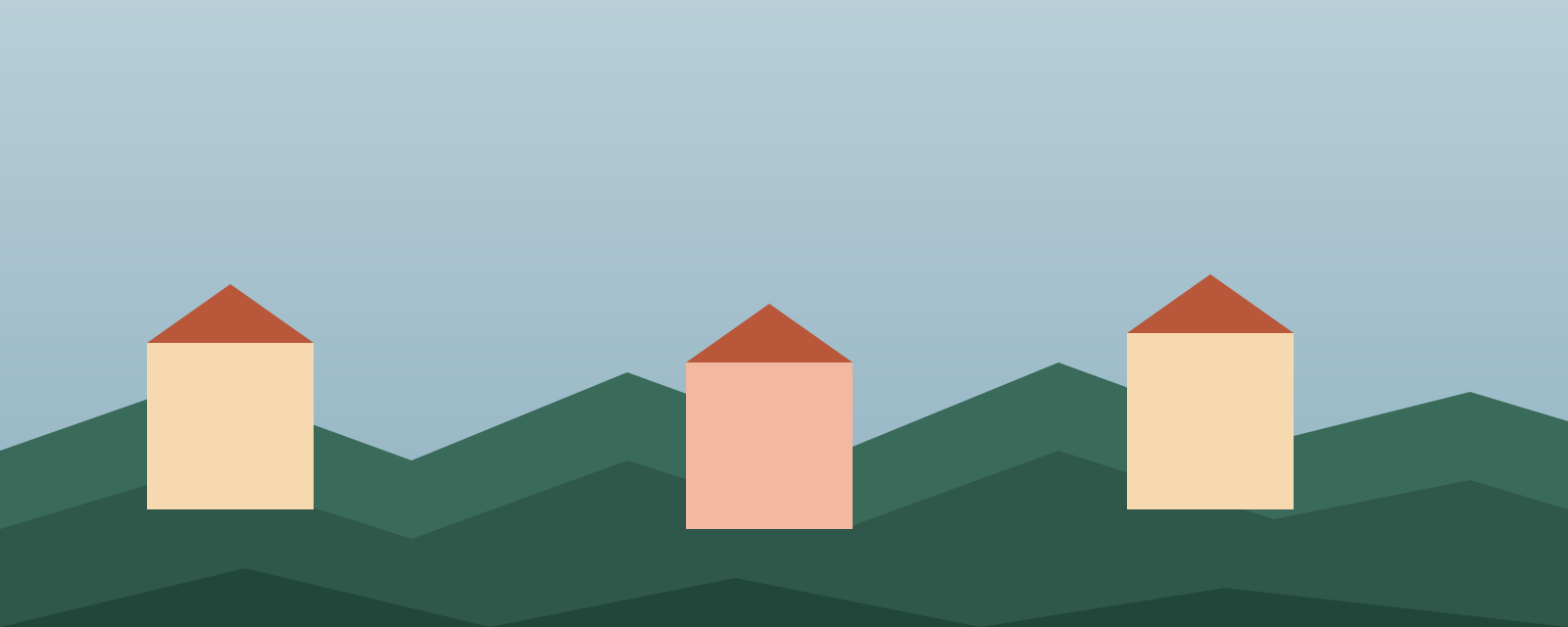
Castro, the island capital, tumbles down to an estuary lined with palafitos — fishermen's stilt houses repainted in candy colors that now host cafés and hostels. The gamboa footbridge lets you walk among them at water level, and the hill above the market gives the classic postcard view. The town's cathedral — a giant wooden upside-down ship painted yellow — is the most famous of the island's churches.
The Churches Route
Sixteen wooden churches built by Jesuit missionaries and local shipwrights between the 17th and 19th centuries make up one of Latin America's most unusual UNESCO sites. Built entirely of timber with no nails — the joinery is the architecture — they dot the island's coast. The essential stops: Achao (the oldest, on Quinchao island), Dalcahue (near the market and the ferry to Quinchao), and Tenaún (the most photogenic). A rented car is the practical way to see several in a day.
Penguins at Puñihuil
On the island's wild northwestern coast, the islets of Puñihuil host the only colony in the world where Magellanic and Humboldt penguins breed side by side. Local boatmen run 30-minute trips around the islets (check tides and season — the penguins are present roughly September to March), and the drive from Ancud to Puñihuil itself, along the Pacific shore, is one of the island's best roads.
Chiloé National Park and the wild west
The national park protects the island's temperate rainforest on the Pacific side — a trail system leads from the beach at Cucao inland through the misty woods to the dunes and lagoons. On a fine day the western coast feels genuinely untouched: empty black-sand beaches, waves rolling in from the open Pacific. A two-day trek to Cole Cole bay, along the coast from Cucao, is the classic overnight for hikers.
Food: curanto and the sea
Chiloé's food is its culture. Curanto is the island's great ritual: seafood (clams, mussels, crabs), meat, potatoes and milcao (potato cakes) steamed for hours over hot stones in a ground pit, then served with a long fermenting apple drink called chicha. Fish markets in Castro and Dalcahue are the place to see (and buy) the daily catch — oysters, salmon and king crab at a fraction of Santiago prices.
Practical tips
- The ferry at Pargua is frequent and takes buses — you can cross without a car.
- It rains year-round; a good rain jacket is the most important item on your list.
- Cash outside Castro is scarce — withdraw before leaving the town.
- The island has its own time feel: shops close early outside the towns, and Sunday is quiet.
- Combine Chiloé with the Lake District (north) or the Carretera Austral (east via Chaitén ferry) — both are a single connection away.
Map of the Story
Bookings & Gear for This Trip
These partners help make the trip happen — we only recommend services we'd use ourselves.